Topic: Early Voting

10 chapters across the catalog

Gavin McInnes predicts the election will be "too big to rig" due to massive Election Day turnout from blue-collar voters. He psychoanalyzes "Trump Derangement Syndrome" as "daddy issues," where Trump represents the end of self-indulgent behavior and a return to discipline. McInnes dismisses the threat of riots, noting that the left has already "trashed" major cities like Portland and Philadelphia.
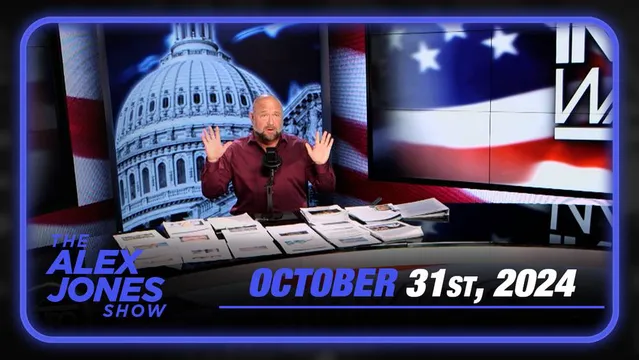
Steve Bannon joins the broadcast following his release from federal prison to discuss the state of the 2024 election. Bannon asserts that Democrats failed to build a sufficient firewall through early voting in key battleground states like Pennsylvania, North Carolina, and Georgia. He emphasizes that a massive Republican turnout on Tuesday is required to secure a victory for the MAGA movement and reclaim the presidency.

Mark Mitchell, head of Rasmussen Reports, reveals his final national popular vote call, showing Donald Trump leading by approximately 2.4 to 3 points. Mitchell suggests that if these numbers hold, Trump could see a sweep of battleground states similar to Ronald Reagan's 1980 victory over Jimmy Carter. He notes that Republican early voting performance is significantly stronger than in 2020, while Democratic turnout in traditional urban centers appears depressed.

Analyst Bill Mitchell reports that the Harris campaign is pulling resources out of North Carolina to defend Virginia as internal polling shows Trump gaining ground. Data from Virginia suggests that the Democratic early voting lead is significantly lower than in 2020, while low-propensity voters are reportedly breaking for Trump by a two-to-one margin.

Alex Jones provides an update on legal battles regarding voter rolls in Michigan, Alabama, and Virginia, where federal judges have ordered non-citizens to remain on ballots. He encourages listeners to follow the new Alex Jones Network on X (formerly Twitter) due to the potential shutdown of InfoWars in November. The segment emphasizes the importance of peaceful exposure of fraud rather than violent reactions.

Positive early voting numbers in Florida, Arizona, and Pennsylvania are cited as evidence of a "wave" that may be "too big to rig." Specific mention is made of Cliff Maloney's work with the "Pennsylvania Chase" to increase Republican mail-in ballot returns. The discussion warns of potential mass shootings or cyber attacks being used as pretexts to extend the vote-counting period for weeks.

Early voting reports indicate potential issues as Texas reportedly allows non-citizens to use non-citizen IDs for voting purposes. The federal government is accused of forcing Alabama and other states to reinstate illegal aliens on voter rolls. Listeners who are poll watchers or postal workers are encouraged to call in and share their firsthand experiences with the voting process.

Roger Stone highlights that early voting begins in Pennsylvania on September 16th, shortening the actual campaign timeline. He discusses the Trump campaign's efforts to define Kamala Harris through her past support for defunding the police and decriminalizing border crossings. Stone also questions the legitimacy of Democratic fundraising through Act Blue, suggesting potential money laundering, while remaining bullish on Trump's grassroots support among evangelicals and minorities.

President Joe Biden and Democratic officials are criticized for suggesting that election results in key battleground states may take several days to finalize. Claims are made that mail-in voting and early voting systems are susceptible to fraud and manipulation by computer programs and "mules." The segment also highlights legal efforts by Democratic lawyer Marc Elias to disqualify certain Republican candidates from the ballot.

Roger Stone advises voters to ignore manipulated polls and focus on trend lines, which currently favor Republicans. He strongly encourages voting in person on Election Day to prevent the manipulation of results through early or mail-in voting. Stone argues that Democrats are failing to divert attention away from economic issues like the fentanyl crisis and high energy costs.