Topic: Youtube Censorship

71 chapters across the catalog

The discussion turns to "social media psychosis," where a large segment of the population is overwhelmed by a sea of information and disinformation. Mark Dice explains how YouTube and other platforms changed their algorithms after the 2016 election to boost corporate media and "shadow ban" independent voices. He notes that younger generations under 35 have largely abandoned traditional outlets like Fox News in favor of viral social media content.
The 2nd Great Crusade Has Begun!!!
1:11:55 - 1:15:35

The 2nd Great Crusade Has Begun!!!

Rebirth of the West, May 16th Rally and JD Vance

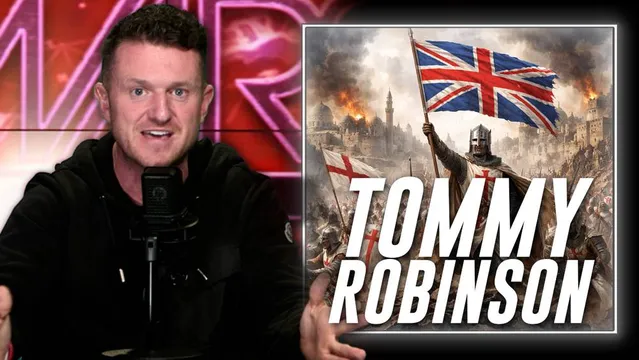
The "Unite the Kingdom" movement plans its next major event for May 16th, which Robinson describes as part of a four-year vision for the rebirth of Western civilization. He praises American politicians like JD Vance and Marco Rubio for lecturing the EU on free speech rights. Despite ongoing censorship on Meta platforms, Robinson notes that his YouTube account was recently reinstated, signaling a shift in the global information war.

Alex Jones addresses his exclusion from major podcasts like Theo Von's and Sean Ryan's, attributing it to fear of YouTube demonetization. He claims these hosts are "scared" to have him on despite their public stances in favor of free speech. Jones asserts that he provides a "35,000-foot view" that cuts through mainstream narratives, which is why he remains the most "verboten" person in media.

Savannah Hernandez expresses her gratitude to Alex Jones for his support during her career and his resilience when InfoWars was banned from major platforms in 2018. She emphasizes the value of hard work she learned at InfoWars, contrasting it with corporate media hosts who rely on teleprompters. Jones reiterates his belief in the American people and the necessity of fighting against evil despite the personal costs of censorship.

The "censorship regime" on platforms like Meta and YouTube is attributed to executives who allegedly prioritize Israeli interests and the suppression of "anti-Semitic conspiracy theories." The late Susan Wojcicki is mentioned as having targeted independent media figures for termination. The discussion highlights the irony of being labeled "anti-Semitic" while simultaneously being attacked by the same groups for not being radical enough.

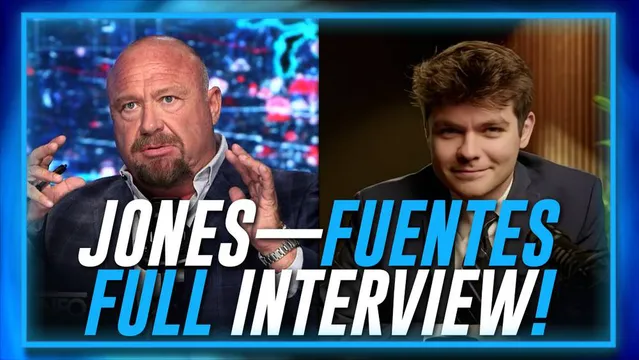
Representative Jim Jordan announced that Google has committed to allowing previously banned creators back onto YouTube. Nick Fuentes and the host express skepticism, noting it may be a "pilot program" or token concession. They credit Elon Musk's takeover of X as the primary catalyst for the recent liberalization of speech on major tech platforms.

Google and YouTube have committed to allowing creators previously banned for political speech violations to return to the platform following oversight efforts by Representative Jim Jordan. While Alphabet's Eric Schmidt reportedly signaled an end to certain restrictions, YouTube has clarified that the reinstatement is currently a pilot program. Skepticism remains regarding whether high-profile figures like Alex Jones or Nick Fuentes will be fully restored or if the move is a token concession to avoid further congressional investigation.

Owen Shroyer discusses the rapid removal of the shooter's content from YouTube and the importance of independent journalists archiving evidence before it is scrubbed. He claims that the alternative media's ability to move faster than federal censors has exposed an ongoing cover-up. Shroyer argues that if the government does not divulge these details soon, their credibility will be permanently destroyed.

Owen Shroyer and Alex Jones discuss why Big Tech platforms specifically target live-streaming accounts during breaking news events. They argue that controlling the "first wave" of information is essential for the government to establish a false narrative. Jones praises the accuracy of Kyle Serafin's "hunches," which he attributes to the integration of complex data and experience.

YouTube and Google are accused of election meddling for allegedly suppressing search results for the Joe Rogan interview with Donald Trump. Jones claims that for weeks, search engines also hid information regarding the assassination attempt on Trump. He argues that these actions are directed by the deep state to control the flow of information before the election.

YouTube's deletion of Lauren Chen's channel is cited as an example of the government using the Foreign Agents Registration Act (FARA) to censor independent media. Robert Barnes notes that foreign investment in U.S. media is common and that the current crackdown is a selective weaponization of the law to suppress dissident speech.

Former YouTube CEO Susan Wojcicki passed away at age 56 from lung cancer. The segment notes her role in implementing strict COVID-19 misinformation policies and removing over a million videos from the platform. Critics of her tenure argue that her efforts to silence "inconvenient truths" about vaccines and alternative treatments were a form of dangerous censorship.

The guests complain about censorship on YouTube and Google, claiming that searches for "Flat Earth" are redirected to propaganda videos. They argue that the system's efforts to hide this information prove its importance. Jones agrees that the system lies but maintains that "belief is the enemy of knowing," urging listeners to verify information for themselves.

LIVE Coverage of The Trump Verdict With Alex Jones & Special Guests! — FULL SHOW 5/30/24
1:55:05 - 1:59:52

LIVE Coverage of The Trump Verdict With Alex Jones & Special Guests! — FULL SHOW 5/30/24

Brian Rose and the London Real Censorship Story

Brian Rose, founder of London Real, shared his experience of being deplatformed by YouTube after a viral interview with David Icke in 2020. He described the creation of the Digital Freedom Platform as a response to big tech censorship, which eventually reached a live audience of one million people. Rose announced the premiere of his new film, "We Will Not Be Silenced," documenting his fight for free speech.

LIVE Coverage of The Trump Verdict With Alex Jones & Special Guests! — FULL SHOW 5/30/24
3:13:48 - 3:21:20

LIVE Coverage of The Trump Verdict With Alex Jones & Special Guests! — FULL SHOW 5/30/24

Brian Rose on the Mr. Rogers Channel Mandate

Brian Rose described how YouTube representatives tried to force him to become a "Mr. Rogers channel" by only discussing meditation and health. He recounted a specific instance where YouTube's policies regarding the WHO were contradictory, highlighting the arbitrary nature of their censorship. Rose argued that big tech companies are practicing "digital colonialism" by stealing and selling user data.

The success of Rumble as a free-speech alternative to YouTube is analyzed, with Jeremy noting that the platform is now a legitimate competitor for live-streaming audiences. YouTube is accused of openly admitting to manipulating its algorithm to influence the upcoming election. The shift of major creators to Rumble and X is seen as a critical development in breaking the corporate media's monopoly on information.

The 19-year-old son of former YouTube CEO Susan Wojcicki was found dead in a UC Berkeley dorm following a suspected drug overdose. Alex Jones notes that Wojcicki previously cited her son's interest in InfoWars as a reason for banning the channel from YouTube. The event is presented as evidence that globalist leaders are not immune to the societal issues, such as the fentanyl crisis, that their policies allegedly exacerbate.