Topic: State Street

14 chapters across the catalog

Donald Trump announced a forthcoming executive order and working group aimed at banning institutional investors like BlackRock and State Street from purchasing single-family homes. The policy seeks to prevent large conglomerates from monopolizing the housing market and driving up prices for average citizens. This populist measure targets both domestic firms and foreign entities, specifically those linked to China.
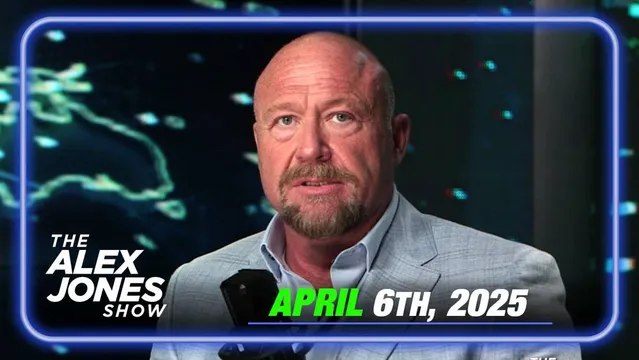
Stephen Colbert used his platform on The Late Show to mock the recent Dow Jones nosedive and pleaded for the "Deep State" to intervene against Donald Trump's economic policies. Critics argue that late-night hosts like Colbert and Jimmy Kimmel receive daily talking points from Democratic leadership to promote domestic tension. The segment highlights the desperation of the globalist elite as their influence over public opinion and the financial system continues to erode.

The American economic system of the 1950s created a massive middle class that challenged traditional global power structures. Globalist entities like BlackRock and State Street are accused of using central bank currency and slave labor deals in China to de-industrialize the United States. This shift moved the U.S. toward a service economy, effectively turning the nation into a "shadow of its former self" to benefit a technocratic elite.

BlackRock, Vanguard, and State Street control the majority of global assets and are pushing for a cashless society. This agenda includes monitoring all human behavior in real-time and implementing a social credit score. Jones references policy reports suggesting the elite plan to force the public to eat bugs and ban traditional home heating methods.

Major investment firms including BlackRock, Vanguard, and State Street are identified as the primary shareholders of competing entities across the pharmaceutical, insurance, and food industries. This ownership structure creates a cycle where companies like Monsanto produce chemicals linked to cancer while sister companies under the same investment umbrella sell treatments for those diseases. The discussion highlights how Pfizer and other firms view the rising cancer rate as a primary growth market for future profits.

The "One World Government" model promoted by the UN and World Economic Forum is failing, leading globalists to consider a "Hunger Games" style model of powerful city-states. Martin Armstrong notes the exodus of wealth and talent from high-tax jurisdictions like New York to Florida as a precursor to this shift. He suggests that as national systems collapse, power will consolidate in specific hubs that maintain their own economic and security parameters.

Guest Luke Rudowski discusses the parallels between current university protests and the early days of Occupy Wall Street. He warns right-wingers against cheering for police brutality, arguing that state repression only serves to push the middle class toward radicalism. Rudowski advocates for a return to Ron Paul-style libertarian principles and an allergy to the expanding police state.

Ezra Levant scrums Ronald Hanley, CEO of State Street, regarding the firm's commitment to Environmental, Social, and Governance (ESG) standards. Hanley denies that State Street is pulling back from ESG despite criticism from figures like Elon Musk and divestment from states like Florida. He claims the firm remains focused on shareholder value, while Levant questions if ESG violates fiduciary duties.

WEF President Borge Brende and US National Security Advisor Jake Sullivan discuss the transition from the post-Cold War era to a "new order" based on international law and adapted institutions. The segment also revisits the scrum with State Street CEO Ronald Hanley, who insists that ESG is about "value, not values," despite political pushback and divestment campaigns.

Dom Lucre provides a historical analysis of how Democratic policies, specifically under Lyndon B. Johnson, sabotaged the progress of Black Americans. He notes that prior to the 1964 Civil Rights Act, Black labor participation and marriage rates were significantly higher. Lucre argues that the "welfare state" was a tool for control and that modern corporate "representation" is merely a camouflage for the establishment.

The discussion critiques the "consortium" of BlackRock, State Street, and Vanguard for jacking up housing prices and enforcing ESG demands. Jones plays a clip of Larry Fink discussing the need to "reimagine finance" through public-private partnerships. He claims Fink is working with King Charles to cut off resources while publicly pretending to be a moderate on hydrocarbons.

Three investment firms—BlackRock, Vanguard, and State Street—reportedly control 88% of the companies in the S&P 500. These entities are accused of using their $15 trillion in liquidity to force corporate boards to adopt ESG and social credit scores. This "stakeholder capitalism" is characterized as a merger of fascism and communism designed to dismantle the nuclear family and national sovereignty.

The documentary Monopoly by Tim Gehlen illustrates how a small group of financial institutions, specifically BlackRock and Vanguard, control the majority of global industries. These entities hold dominant stakes in food, tech, energy, and banking, forming a pyramid of private power that influences the Federal Reserve. This concentration of wealth among families like the Rothschilds and Rockefellers is presented as a threat to national sovereignty.

Greg Reese reports on the concentration of global wealth within a small group of financial institutions including Vanguard, BlackRock, and State Street. The report claims these entities control major sectors such as Big Tech, agriculture, and pharmaceuticals through a pyramid of financial power. It asserts that inheritance and monopoly allow a few families to rule over the world like unelected kings, necessitating a private sector campaign to achieve economic transition.