Topic: Self

353 chapters across the catalog

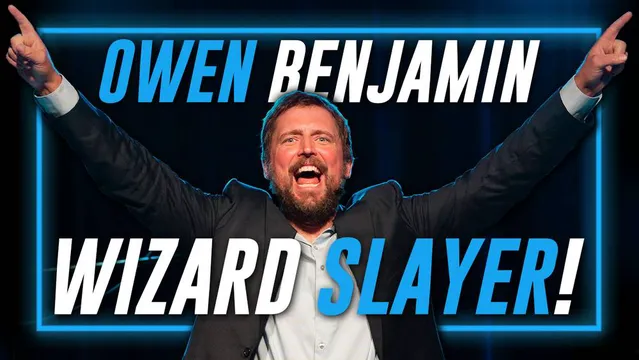
Owen Benjamin discusses his move to North Idaho to establish a self-reliant farm and campground, emphasizing the mantra "do not rely" instead of "do not comply." He argues that the only power "wizards" have is the population's reliance on their systems for food and water. The conversation briefly touches on Congressman Tim Burchett's alien disclosure claims, which Benjamin views as potentially demonic or fake.

Owen Benjamin discusses his move to North Idaho and his commitment to "do not rely" instead of just "do not comply." He describes crowdfunding a campground for community meetups and weddings, while maintaining a separate farm with cows, goats, and alpacas. Benjamin emphasizes that self-reliance in food and community is the only way to escape the "wizard pyramid" and the control of digital platforms like PayPal and Twitter.

Anthony Cumia discusses Virginia House Bill 110, which prohibits carrying firearms or leaving them in vehicles in specific areas of Richmond, such as Capitol Square. He argues these laws effectively force citizens to leave their weapons at home, rendering them defenseless during their commute. Cumia points out that lawmakers often exempt themselves from these restrictions, maintaining private security while infringing on the rights of their constituents.

Rex Jones and Tim Tompkins critique the U.S. government's long-term foreign policy, including the expansion of NATO toward Russia's borders despite past promises. They express disappointment that Donald Trump appears to be following the same "political apparatus" rather than the populist agenda they voted for. The hosts argue that all governments act in their own self-interest, often at the expense of the people they represent.

A supporter of activist Jake Lang was reportedly separated from his group and forced by a mob to remove his American flag jacket while police stood by. Stewart Rhodes argues that these incidents occur because federal agents lack the manpower to properly cordon off operational areas. He emphasizes that vehicles are considered deadly threats under federal use of force standards, justifying defensive actions taken by agents when surrounded by hostile crowds.

Stewart Rhodes announces the relaunch of the Oath Keepers and encourages veterans to prepare for significant civil unrest. The segment emphasizes the inherent right to self-defense and the duty of citizens to stand up when the government becomes destructive to liberty. Rhodes, a former Ron Paul staffer and Yale graduate, frames the current crisis as a moment where the people must act if the "plumber" they elected fails to fix the system.

The New Black Panther Party for Self-Defense has called for aggressive armed patrols to escort immigrants and hold ICE agents accountable. Spokesmen for the group stated they would meet federal force with equal force, utilizing semi-automatic shotguns and assault rifles. They argue that public servants should be fearful of a dissatisfied public and that citizens must arm themselves with superior firepower to counter perceived tyranny.

Alex Jones provides a detailed analysis of the shooting of Renee Good, arguing that the ICE agent was justified after being rammed by her vehicle. He notes that the agent had been nearly killed in a similar incident six months prior. Jones criticizes the media for turning a "communist loon bag" into a martyr while ignoring the physical evidence of the assault on the officer.

Harrison Smith discusses the "mass awakening" occurring globally and returns to the Renee Good shooting in Minneapolis. He argues that Good was a "staccatic terrorist" trained by activists to put herself in harm's way to create a martyr. Smith maintains that the shooting was a clear act of self-defense after Good attempted to use her car as a deadly weapon against an officer.

The show analyzes video footage of the Renee Good shooting, claiming it proves the officer was hit by the car before firing. Slow-motion analysis is used to show Good's tires spinning on ice as she allegedly floored the accelerator. The speaker argues this footage definitively debunks claims by Jen Psaki and Don Lemon that the officer was never in danger.

The Chicago Police Chief issued a public warning stating that boxing in law enforcement vehicles is a crime that justifies the use of deadly force. Alex Jones plays the audio to support his stance that the ICE agent in Minneapolis acted reasonably when his vehicle was obstructed. Jones demonstrates the lethality of a 3,000-pound SUV compared to a handheld weapon to emphasize the danger faced by the officer.

Kyle Rittenhouse provides his perspective as a peer to officer Jonathan Ross, analyzing the footage of the Minneapolis shooting. Rittenhouse asserts that being hit by a 4,000-pound vehicle constitutes a deadly force situation, justifying the officer's response. They discuss reports that Renee Good had a history of child abuse and radicalization, contrasting her public image as a "poet" with her alleged actions on the street.

Alex Jones and Kyle Rittenhouse discuss the "vindication" of the ICE agent in Minneapolis following the release of point-of-view footage. They praise JD Vance for standing behind the officer and having the intelligence to identify the radical background of the attacker early on. Jones reiterates that Trump's move to pull out of the UN is a major victory for national sovereignty.