Topic: Peer To Peer

5 chapters across the catalog

Mike Adams advises listeners to download and store content locally, as cloud-based systems will soon eliminate anonymity. Alex Jones claims that his intuition about the Friday security shutdown was a direct "tap on the shoulder" from God. He frames the struggle as a spiritual battle against the eugenics-based philosophy of figures like Francis Galton.
The future of information distribution is compared to the decentralized nature of Bitcoin and Monero. Mike Adams suggests that large language models should be distributed via peer-to-peer systems that do not rely on domain names. This would allow individuals to keep entire knowledge bases on thumb drives for offline use in "cabin in the woods" scenarios, ensuring access to information even if the internet is censored or disabled.

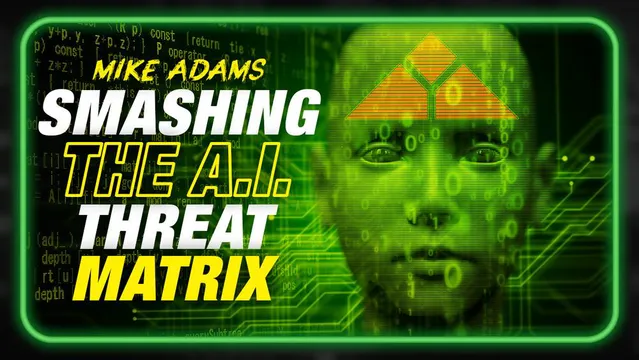
Smashing The A.I. Threat Matrix: How Humanity Defeats Skynet
1:17:08 - 1:19:29

Smashing The A.I. Threat Matrix: How Humanity Defeats Skynet

Peer-to-Peer AI Distribution, Privacy and Torrents

Just as Bitcoin and Monero decentralized finance, peer-to-peer systems and torrents will be used to distribute large language models that cannot be censored by governments. These systems allow users to query sensitive medical or political information privately and offline, preventing corporations from building surveillance profiles. This decentralization ensures that even if the internet is restricted, human knowledge remains accessible on local hardware.

Jones and Adams discuss decentralization as the primary defense against the "Great Reset." Adams advocates for physical gold, silver, and decentralized cryptocurrencies like Bitcoin that cannot be easily manipulated by governments. They predict a future where video platforms, email, and communication networks operate on peer-to-peer systems without central servers, bypassing the censorship intended by legislation like the Restrict Act.

A caller suggests that InfoWars adopt "WebTorrent," an open-source peer-to-peer file-sharing library, to reduce massive bandwidth costs. The host admits that the show spends millions on bandwidth and has considered buying BitChute in the past but lacked the funds. They discuss how a P2P system would make the video infrastructure more resilient as the audience grows, potentially solving the issue of videos failing under high traffic.