Topic: John F Kennedy

74 chapters across the catalog

Donald Trump is reportedly attempting to bring the UFO file back under direct executive control, a move previously attempted by John F. Kennedy and Dwight D. Eisenhower. Trump’s interest in the subject is linked to his uncle, John Trump, who worked closely with Vannevar Bush on classified projects. Recent drone swarms over military bases and the homes of officials like Marco Rubio are interpreted as harassment by a "breakaway civilization" possessing advanced technology.
Daniel Lis posits that the primary reason for the JFK assassination was Kennedy's intent to share UFO technology with the Soviet Union to end the Cold War. The "Ex-Protect" group, consisting of intelligence and aerospace interests, viewed this as treason and acted to preserve their monopoly on exotic technology. Modern disclosure efforts are often led by counterintelligence figures who frame UFOs as a "threat" to justify increased emergency powers.

The Bureau of Prisons reportedly has no record of Jeffrey Epstein's final phone call, which occurred the night of his death. Senator John Kennedy questioned Kash Patel on the timeline for releasing all records related to Epstein's alleged suicide, receiving vague answers about protecting victims. The host characterizes the "broken cameras" and "sleeping guards" narrative as an intelligence test that most Americans fail to believe.

The alliance between communists and Islamists is compared to the 1979 Iranian Revolution, where the two groups united to overthrow the Shah before the Islamists purged the communists. Matt Bracken references JFK's 1962 deployment of 31,000 troops to Oxford, Mississippi, to argue that Trump's potential use of the National Guard is historically moderate. He suggests the left is trying to trigger a "Fort Sumter" moment.

Senator John Kennedy predicts that the "Schumer shutdown" will end when the Democratic leader allows a small group of members to vote with Republicans to reopen the government. Kennedy argues that Chuck Schumer is currently posturing to appease the socialist wing of his party by demanding $1.5 trillion in spending. The shutdown is described as a political maneuver rather than a policy-driven conflict.

The Federal Reserve is characterized as a private banking syndicate that operates above the law, citing statements from Alan Greenspan and Jerome Powell. Jones references President John F. Kennedy's 1963 issuance of United States Notes as a move to bypass the Fed, suggesting this was a primary motive for his assassination. He describes the government as being run by various "mafias" and syndicates.

John F. Kennedy was allegedly assassinated due to his intent to share UFO files and establish a joint moon mission with the Soviet Union under Nikita Khrushchev. This move toward a peaceful, science-based space zone was opposed by deep state actors who favored the militarization of space. Current political figures like Donald Trump and Robert F. Kennedy Jr. are viewed as potential catalysts for finally disclosing these long-held secrets.

Senator John Kennedy reports that Chuck Schumer is blocking Trump's judicial and administrative nominees to demand the release of billions in "slush fund" money. Trump publicly called out the move as political extortion and told Schumer to "go to hell" on social media. Schumer responded by claiming Trump "caved" and brought home nothing, while the Senate headed into recess with no deal on confirmations.

Senator John Kennedy criticizes NPR for using $500 million in taxpayer funds to promote what he describes as biased and absurd headlines. Kennedy cites NPR stories regarding "racist country music," "racist birds," and the Taliban's concerns about climate change. He argues that while NPR has the right to publish such content, it should not be subsidized by the American public.

Economist Jeffrey Sachs tells Tucker Carlson that no U.S. president has truly controlled the CIA since John F. Kennedy. The segment also features Mike Pence criticizing Donald Trump's decision to pardon January 6th protesters who assaulted police. Pence calls for universal condemnation of political violence following the recent shootings in Minnesota and assassination attempts on Trump.

Senator John Kennedy questions the new head of the Department of Energy regarding $93 billion in loans issued in a 76-day period. The audit suggests many loans were granted to entities without business plans or financial vetting. Comparisons are made to a $42 billion internet program that allegedly failed to connect a single person to fiber optic service.

A viral video compilation shared on True Social details various mysterious deaths and suicides allegedly linked to Bill and Hillary Clinton. The segment lists individuals such as Vince Foster, Seth Rich, and Mary Mahoney, suggesting foul play was involved in their passing. The narrative frames these events as part of a long-standing pattern of corruption and "body counts" associated with the Clinton family.

Alex Jones shares childhood memories of questioning the reality of Santa Claus and the transition from black-and-white to color in The Wizard of Oz. A caller then lists a series of historical coincidences between Abraham Lincoln and John F. Kennedy, such as their election years and the names of their secretaries. Jones notes how history often "rhymes" but corrects the caller on the details of Kennedy's assassination.

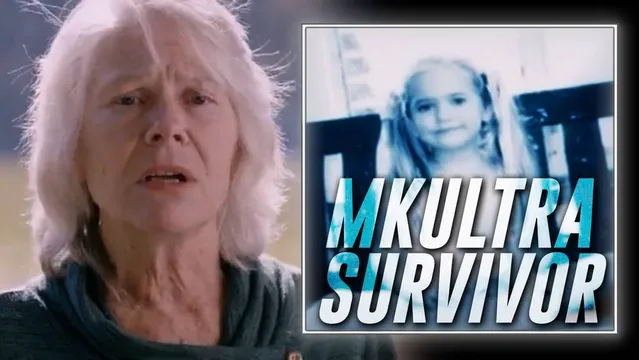
Kathy O'Brien recounts her childhood in Muskegon, Michigan, where she was sold into CIA mind control by her father. She claims that Gerald Ford, then a local politician, granted her father immunity from child pornography charges in exchange for her enrollment in MKUltra. O'Brien further alleges that Ford was later rewarded with the presidency for his role in covering up the Kennedy assassination via the Warren Commission.

Senator John Kennedy interrogated Justice Department lawyers regarding the legal basis for nationwide universal injunctions issued by district courts. The testimony revealed that there is no statutory basis, Supreme Court precedent, or English common law foundation for a single judge to impact non-parties outside their courtroom. Kennedy highlighted that 86 such injunctions were used to weaponize the judiciary against the Trump administration's first term.

Dane Wigington recounts a private discussion with Robert F. Kennedy Jr. regarding the need for legal protections for whistleblowers involved in climate engineering. The case of CIA whistleblower John Kiriakou is cited as a cautionary tale of the risks faced by those exposing secret programs. Wigington asserts that the programs are funded by "black op money" and compares the secrecy to the Manhattan Project.

The firing of high-ranking military officials is defended using historical precedents, countering media claims that such actions are unprecedented. Examples include Harry Truman relieving Douglas MacArthur during the Korean War and John F. Kennedy removing Curtis LeMay and Lyman Lemnitzer after the proposal of Operation Northwoods. Abraham Lincoln's frequent replacement of commanding generals during the Civil War is also cited.

The term "conspiracy theory" is identified as a CIA invention from 1964 designed to discredit those questioning the John F. Kennedy assassination. Referencing Alexander Solzhenitsyn, the discussion posits that the modern establishment operates on a "pillar industry" of lies that have become a virtual reality of deception. This system of delusion is described as a generational theft that is finally collapsing as the public wakes up to the reality of shadow corporate takeovers.

The growth of the U.S. bureaucracy is traced back to the National Security Act of 1947, which allowed for government secrecy. Historical parallels are drawn between Donald Trump and former presidents Richard Nixon and John F. Kennedy, who allegedly faced deep state opposition for attempting to cut spending. Allegations of massive insider trading and wealth accumulation are leveled against Nancy Pelosi and Maxine Waters.