Topic: Digital Services Act

17 chapters across the catalog

Australia has passed the Social Media Minimum Age Act, banning accounts for those under 16 and requiring biometric or ID-based verification. Critics, including Elon Musk, argue this is a backdoor for mass surveillance and total internet control. Simultaneously, the EU's Digital Services Act and the UK's Online Safety Act are imposing heavy fines on platforms that fail to censor "misinformation" as defined by government agencies.
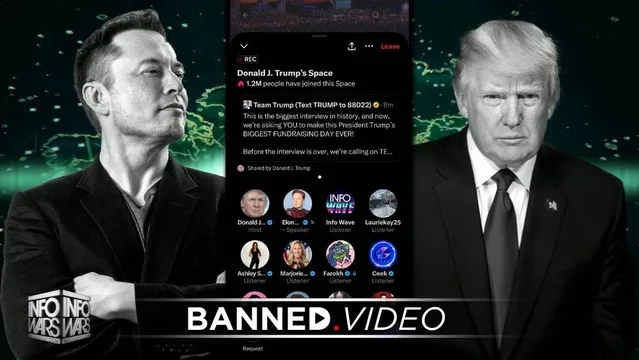
The European Union has fined Elon Musk's X platform 120 million euros for violating content legislation under the Digital Services Act. The EU reportedly offered Musk a "secret deal" to censor speech quietly to avoid fines, which he refused. Additionally, the EU attempted to block Musk from hosting a live "Space" with Donald Trump, which is characterized as foreign election meddling.

The Heritage Foundation and legal expert Jonathan Turley have exposed documents showing how the U.S. government and figures like Hillary Clinton use European regulations to bypass the First Amendment. Reuters reportedly received $300 million to discredit Elon Musk, while independent media outlets like InfoWars are targeted by CIA and FBI-linked operations. The segment warns that the "anti-free speech movement" has metastasized from higher education into global governance.

A 32-year-old man, John R. Acero, was arrested for scaling the wall at Trump's Mar-a-Lago estate, an incident the host attributes to media-driven radicalization. In Europe, the EU is ramping up the "Digital Services Act" to maintain the status quo of online censorship. The segment warns that countries like Brazil, Canada, and Australia are joining a global effort to "get" Elon Musk for his defense of free speech.

Alex Jones discusses the legal battle over his social media accounts, arguing that the bankruptcy trustee's attempt to sell his name and likeness violates the 13th Amendment. He links his situation to the European Union's use of the Digital Services Act to target Elon Musk's global revenue for allowing free speech on X. Jones warns that these actions represent a coordinated effort to seize the private identities of high-profile critics of the globalist agenda.

The arrest of Telegram founder Pavel Durov in France is analyzed as a sign of desperate power structures resorting to totalitarianism to maintain control over information. Martin Armstrong warns that the EU's Digital Services Act and similar measures in Brazil are designed to force tech platforms to censor political dissent. He advises high-profile figures and activists to avoid traveling to the EU or Brazil due to the risk of politically motivated detention.

The discussion analyzes Mark Zuckerberg's recent admission of government pressure, suggesting it is a move to protect Facebook's declining financials. Dr. Martin points out the hypocrisy of the EU violating its own laws regarding online rights, which were previously championed during the Arab Spring.

Trump / Elon The Chat Of The Decade: Full Live Infowars Coverage and Analysis With Alex Jones and Crew
16:58 - 20:51

Trump / Elon The Chat Of The Decade: Full Live Infowars Coverage and Analysis With Alex Jones and Crew

Thierry Breton's Letter and EU Regulatory Overreach

A detailed critique of European Commission official Thierry Breton's letter to Elon Musk regarding the Trump interview. The hosts argue the letter is a desperate attempt to intimidate EU citizens into self-censorship by making an example of a high-profile figure like Musk.

Donald Trump is shown signing an executive order to protect free speech on college campuses. The segment highlights leaked audio and clips from Big Tech executives discussing the removal of figures like Alex Jones and the "gateway" nature of content from Ben Shapiro and Jordan Peterson. The EU's Digital Services Act is also mentioned as a tool for global censorship.

Elon Musk is praised for resisting a "secret deal" from the European Commission that allegedly offered to waive fines against X in exchange for quiet censorship of speech. The European Union has formally charged X with breaching the Digital Services Act, specifically targeting the platform's "blue check" system as deceptive. Musk's defiance is contrasted with other social media platforms that reportedly accepted the EU's terms to regulate content during the U.S. election cycle.

EU Commission President Ursula von der Leyen addressed Klaus Schwab at the World Economic Forum, identifying disinformation and misinformation as the top global risks. She highlighted the Digital Services Act as a tool to hold internet platforms responsible for content, particularly in the era of generative AI. The segment interprets this as a move to silence dissent and control the narrative through artificial intelligence.

The European Union has officially launched a probe into X under the Digital Services Act, citing concerns over disinformation. Alex Jones frames this as a foreign power meddling in U.S. sovereignty and elections. He references the "Twitter Files" as evidence of prior deep state censorship and calls on Congress to pass legislation shielding American tech platforms from foreign regulatory overreach.

Maria Z describes the "AI World Society" and a "new social contract" where individuals are treated as objects and earn credits based on behavior. She links this to the Digital Services Act in the EU and the work of Ursula von der Leyen. Dr. Laibow argues that these systems are designed to create a "hive mind" and remove all individual human rights.

The European Union sent a formal letter to Elon Musk regarding the dissemination of illegal content and disinformation on the X platform following Hamas attacks on Israel. The segment details how law enforcement authorities in the EU and Europol are now legally empowered to demand content removal. Jones compares this to domestic pressure from the CIA and FBI on tech giants, arguing that global leaders are coordinating to suppress "dangerous extremist views" under the guise of combating misinformation.

Matt Taibbi explains how the Restrict Act mirrors the European Digital Services Act and recommendations from the Aspen Institute. He describes a "wish list" for governments to have absolute access to platform data and the ability to automate transcripts for AI surveillance. Taibbi notes that authorities were particularly concerned about a "worldwide freedom rally" organized on Telegram, leading to a push for all digital spaces to be "instantly searchable" by the state.

Journalist Matt Taibbi reports on communications from the Aspen Institute regarding the Restrict Act and the European Digital Services Act. These legislative frameworks aim to grant governments absolute access to platform data and the authority to moderate content through "trusted flaggers." The proposed systems require all content, including video, to be algorithmically searchable and instantly transcribable for AI surveillance.