Topic: C Sections

68 chapters across the catalog

A jury found Meta guilty of 37,500 willful violations regarding unfair trade practices and child safety, drawing comparisons to the "Big Tobacco" legal moment. Meanwhile, new legislation dubbed the AI Dictatorship Act is criticized for granting Big Tech companies immunity from lawsuits. In a separate development, reports suggest the AI bubble may be bursting as ChatGPT faces high costs and declining user engagement.

If the Supreme Court rules against the current tariff structure, Dr. Kirk Elliott outlines "Plan B" options, such as invoking Section 122 of the 1974 Trade Act or Section 338 of the 1930 Tariff Act. These laws allow for temporary tariffs to address trade imbalances and discrimination against U.S. trade. The discussion emphasizes that the administration has multiple legal avenues to continue its protectionist policies.

Sanger suggests that Congress should create a "carve-out" for Section 230 immunity for platforms that host anonymously sourced factual content while refusing to identify decision-makers. This would allow individuals defamed by Wikipedia to seek legal recourse if the platform does not provide a "right to respond" page. Jones supports this idea, comparing it to a "community notes" system where subjects can challenge inaccuracies about themselves directly.

Tulsi Gabbard details the "savagery" of cartels, including the arrest of a trafficker who lured pregnant women to harvest their organs and sell newborn babies. The DNI highlights the success of the Homeland Security Task Force in taking down "plaza bosses" who controlled the southern border. Despite the government shutdown, federal agents are reportedly working without pay to continue these high-stakes counterterrorism and anti-trafficking operations.

Donald Trump is expected to use Section 232 to impose 100% tariffs on Chinese rare earth materials and strategic metals like lithium and copper. There is speculation on whether silver will be included on this list, which would cause prices to skyrocket due to zero liquidity. Professor Jeremy Siegel of Wharton is cited, calling the lack of a strategic rare earth reserve in previous administrations "treasonous."

Hospitals are accused of pushing cesarean sections to harvest valuable placentas, which are reportedly worth over $100,000 for pharmaceutical-grade stem cells. Further claims are made regarding the illegal harvesting of organs from infants in certain states. The discussion links these practices to broader ethical concerns in the medical and pharmaceutical industries.

Brown discusses the FBI raid on Mar-a-Lago, suggesting Trump kept documents to prevent them from being destroyed by the people they incriminated. He also cites Title 8, Section 1324 of the U.S. Criminal Code, arguing that governors and mayors of sanctuary cities are committing felonies by aiding and abetting illegal immigrants.

Attorney General Pam Bondi considers removing the requirement for DOJ Public Integrity Section approval before indicting members of Congress. This proposal aims to eliminate a layer of review that critics claim has historically protected corrupt Democrats from prosecution. Recent law enforcement actions, including the arrest of Newark Mayor Ross Beccara, are cited as evidence of a shift toward holding elected officials accountable.

Expert consultant Jason Fick discusses the legal battle against the "Censorship Industrial Complex," specifically highlighting a new lawsuit filed by Ty and Charlene Bollinger. Fick notes that the State Department's Global Engagement Center (GEC) is facing a sunset clause and is attempting to hide evidence of domestic surveillance. The segment argues that government-funded "fact-checkers" like NewsGuard are actually tools for viewpoint discrimination and illegal propaganda.

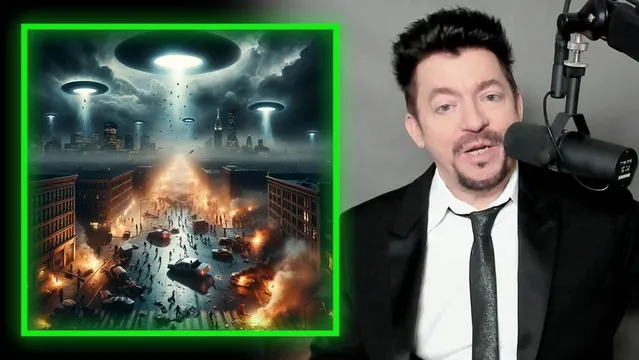
COG Expert Warns Record Level UAP Activity Tied To Shadow Governments' Plans For A Nuclear World War III Scenario
1:13:45 - 1:17:28

COG Expert Warns Record Level UAP Activity Tied To Shadow Governments' Plans For A Nuclear World War III Scenario

Clean Bombs, Mike Flynn, Constitutional War Powers

The possibility of "clean" nuclear weapons is debated, with warnings that any strike would still trigger a global catastrophe by affecting traditional nuclear reactors. A caller suggests that General Mike Flynn should be sent as an envoy to Russia to prevent war. The discussion emphasizes that only Congress has the constitutional power to declare war under Article 1, Section 8.

Donald Trump announces a comprehensive plan to dismantle the "left-wing censorship regime" upon his inauguration. The plan includes an executive order banning federal agencies from colluding with private companies to limit speech and a proposal to revise Section 230. Trump also calls for a "digital Bill of Rights" and a seven-year cooling-off period for intelligence officials joining tech firms.

Hillary Clinton calls for the repeal of Section 230, arguing that social media platforms must moderate content to prevent the loss of "total control." Chase Geyser analyzes the statement, suggesting that the establishment is desperate to silence independent voices like Alex Jones, Edward Snowden, and Julian Assange. The segment frames these efforts as a direct assault on the First and Second Amendments.

Jason Fick explains the "censorship industrial complex," highlighting the State Department's Global Engagement Center (GEC) and its funding of NGOs like NewsGuard. He argues that the government is using Section 230 as leverage to force big tech companies to censor domestic speech. Fick describes a fracture in the Democrat Party as figures like RFK Jr. move toward Trump.

Fick outlines a legal strategy involving a November 22nd court hearing in Pasadena to challenge the current application of Section 230. The goal is to remove the ambiguity that allows big tech to censor with impunity. By obtaining a declaratory action against the U.S. government, the lawsuit aims to stop the pressure on platforms to restrict viewpoint-based speech.

Jack Posobiec analyzes the Supreme Court's decision regarding Section 1512(c)(2), the obstruction of justice statute used against January 6th defendants. He explains that the court ruled the statute was intended for criminal proceedings, not government ones. Posobiec argues this exposes the "unhuman" nature of the DOJ's prosecution of patriots.