Topic: Aids Crisis

5 chapters across the catalog

Senator Ron Johnson discusses his commitment to exposing Anthony Fauci's actions through the Permanent Subcommittee on Investigations. He highlights emails suggesting Fauci's staff knew how to avoid FOIA requests and compares the COVID-19 response to Fauci's handling of the 1980s AIDS crisis. Johnson argues that Fauci suppressed effective treatments like Bactrim in the 80s and Ivermectin during COVID to prioritize vaccine development.
Filmmaker Jeff Hayes and publisher Tony Lyons discuss the production of "The Real Anthony Fauci" and the historical parallels between the COVID-19 response and the 1980s AIDS crisis. They describe Fauci as a career bureaucrat who has overseen nearly a trillion dollars in grants to build a power base beholden to Big Pharma. The film is intended to serve as a definitive documentation of Fauci's alleged crimes against humanity.

A featured segment with Dr. Robert Malone details his "origin story" during the 1983 AIDS crisis and his observations of Anthony Fauci's political maneuvers. Malone describes his personal journey of realizing the reality of the World Economic Forum's "Great Reset," which he initially dismissed as a conspiracy theory until he saw their detailed policy maps.

The use of nuclear war fears in the 1950s and 60s is compared to the modern use of pandemics to drive public policy. Dyer links the RAND Corporation's promotion of fallout shelters to Anthony Fauci's management of the AIDS crisis in the 1980s. Both are described as psychological warfare campaigns designed to get the public to accept radical changes in lifestyle and governance.

Emergency Sept 11, 2021 Broadcast! Epic Must See Marathon Transmission
2:28:27 - 2:32:26

Emergency Sept 11, 2021 Broadcast! Epic Must See Marathon Transmission

AIDS Crisis Parallel, Anthony Fauci and Medical Censorship

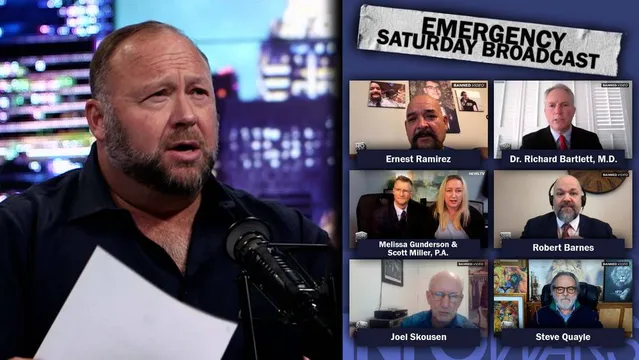
The discussion draws parallels between the current COVID-19 response and the 1980s AIDS crisis, specifically criticizing Anthony Fauci's historical role. Robert Barnes and the host argue that effective, low-cost treatments are being suppressed in favor of expensive pharmaceutical solutions. They claim that medical boards and big tech companies are colluding to censor doctors who advocate for alternative therapeutics.