Topic: Adl Censorship

66 chapters across the catalog

The host condemns the "pager attacks" in Lebanon as acts of terrorism and criticizes the ADL for suggesting such tactics could be used against Americans. Meta's head of censorship is mentioned for reportedly putting "Zionists in control" of content moderation to silence anti-Zionist speech. The host clarifies that his criticism is based on policy and national interest, not anti-Semitism.
ADL CEO Jonathan Greenblatt warns that Jewish communities are being unfairly blamed for the escalating war in the Middle East. The host counters that Greenblatt and the ADL have lobbied for the conflict and used it to increase donations and push for online censorship. While agreeing that random synagogues should not be targeted, the host accuses Greenblatt of using "hateful conspiracy theory" labels to silence legitimate criticism of Israeli government policy.

Alex Jones defends his stance on Israel, stating he is not anti-Semitic but opposes the Israel lobby's influence over U.S. domestic policy and censorship. He highlights footage of Iranian missiles evading U.S. interceptors and discusses the death of the Ayatollah during recent strikes. Gavin McInnes is introduced as a "true icon" of the populist movement to provide further analysis on the "shock and awe" campaign.

A report by Harrison Smith details an "Eight Front War" where the Israeli government and the ADL are working to censor American social media. Simultaneously, new documents reveal that the DOJ secretly wired $2 million in non-competitive grants to Fani Willis while she was building her case against Donald Trump. Jones alleges that Trump's own lawyer, Todd Blanche, has blocked investigations into this government weaponization.

The rise of "disgruntled normies" on social media is attributed to a sudden shift in AI algorithms that now allow Israel-critical and conspiracy content to go viral. Nick Fuentes warns that these new arrivals are vulnerable to ideological capture by Islamists or communists because they lack a conservative foundation. Meanwhile, Australia is passing ADL-authored "anti-Semitism" laws that could lead to arrests for thought crimes and the banning of political groups.

New legislation in Australia is described as an "iron curtain" that allows the government to arrest individuals for speech deemed anti-Semitic. These laws, reportedly influenced by the ADL, are compared to similar trends in the UK, Canada, and Europe. The segment suggests that governments allow "crazy" content to proliferate online to justify mass crackdowns and the implementation of total information control.

A critique is presented regarding the influence of major Jewish lobbies and think tanks on internet censorship and AI tracking. The narrative suggests an alliance between the political left and specific interest groups to de-platform critics of Zionism, claiming that high-level positions at Meta and other tech firms are used to enforce these speech restrictions.

The European Union's 140 million euro fine against Elon Musk is framed as a retaliatory strike against his refusal to censor content on X. The host links his own legal battles with the same law firms and organizations, such as the ADL, that are currently targeting Musk's advertising revenue and platform operations.

The host posits that the "Israel lobby" uses the threat of Islamic extremism as a diversion to pass broader censorship laws. He argues that while Islam poses a genuine threat to Western values, the resulting legislation often targets domestic conservatives and populists rather than the actual perpetrators of violence.

Alex Jones issues a formal challenge to Ben Shapiro for a long-form, unmoderated debate regarding censorship, foreign policy, and the "Israel First" agenda. Jones criticizes Shapiro for his past support of lockdowns and his failure to defend Donald Trump during the January 6th investigations. The challenge includes a critique of Shapiro's intellectual depth and his reliance on establishment talking points provided by Zionist-funded entities.

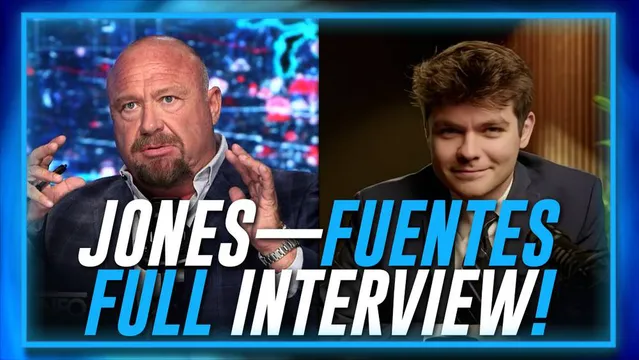
Alex Jones argues that the ADL uses "anti-Semitic" influencers as a false flag to justify worldwide censorship and maintain a "victim" status. He criticizes those who "love Hitler" or deny reality (such as the flat earth theory) as being mentally ill and playing into the hands of the establishment. Jones maintains that while he hosts diverse guests like Nick Fuentes, he does not agree with all their views and seeks to expose the "third and fourth level" thinking of globalist control.

Elon Musk recently shared a compilation of mainstream news headlines that allegedly promote anti-white sentiment and the "eradication" of white people. Nick Fuentes argues that he is targeted by groups like the ADL because he is "intellectually defeating" these narratives by standing up for European-American interests. The discussion frames the left's rhetoric as more radical than historical "Nazi" declarations, leading to a powerful backlash among a diverse range of voters.

The "censorship regime" on platforms like Meta and YouTube is attributed to executives who allegedly prioritize Israeli interests and the suppression of "anti-Semitic conspiracy theories." The late Susan Wojcicki is mentioned as having targeted independent media figures for termination. The discussion highlights the irony of being labeled "anti-Semitic" while simultaneously being attacked by the same groups for not being radical enough.

The "spell" of unquestioned Israeli power is described as being over, leading to concerns that Netanyahu may stage a false flag attack to regain "victim" status and justify radical censorship laws. Myron Gaines suggests that Israel may eventually "offer up" Netanyahu as a scapegoat to rebrand its image to the world. The discussion warns against the use of violence, noting that any such acts would be used by the establishment to implement a "Hegelian clash."

Think tanks like the Institute for Strategic Dialogue, which are linked to the ADL, are accused of "pre-programming" the public to dismiss future terror attacks as false flags. By calling for the pre-emptive censorship of "false flag narratives," these organizations are seen as preparing the information environment for upcoming staged events. This strategy is compared to the suppression of the Hunter Biden laptop story.

Concerns are raised regarding Pam Bondi's comments about banning "hate speech," which critics argue mirrors leftist censorship tactics. Roger Stone and the host discuss the pressure placed on Bondi to backtrack on these statements. They argue that "hate speech" is a subjective term used to silence political dissent.