Topic: 1929

4 chapters across the catalog

Alex Jones claims that powerful globalist forces, including BlackRock, are engineering a massive economic collapse similar to the 1929 stock market crash to usher in the Great Reset. He asserts that trillions of dollars have been moved into EU equity markets while the US market is being set up for a failure that will be blamed on Donald Trump. Jones further suggests that future engineered pandemics and the rollout of robotics will be used to maintain control during the resulting ten-year period of economic hardship.


In a recent press conference, Donald Trump warned that the U.S. is in its most dangerous position ever, facing potential economic depression and World War III. He criticized current leadership for lacking respect on the global stage and failing to handle powerful foreign "gangs." Trump's demeanor is described as serious and brave in the face of a grave national situation.

Wednesday LIVE: Germany Announces Plan to Ban Private Car Ownership — FULL SHOW 4/17/24
2:54:08 - 2:56:41

Wednesday LIVE: Germany Announces Plan to Ban Private Car Ownership — FULL SHOW 4/17/24

Purchasing Power History, 1929 vs Today, Real Estate

A comparison of purchasing power from 1929 to the present shows that while paper currency has lost nearly all its value, gold has maintained its ability to buy a home. In 1929, an ounce of gold was $20.63; today, the same amount of gold required to buy a house in 1929 would be worth over $550,000. Alex Jones uses this to illustrate why he only trusts physical bullion over paper investments.

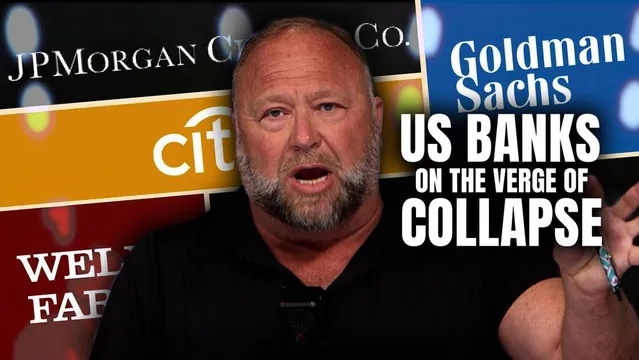
Emergency Report! U.S. Banks On The Verge Of Collapse
57:27 - 1:00:08

Emergency Report! U.S. Banks On The Verge Of Collapse

1929 vs. Today, Purchasing Power, Real Estate Gold Value

A comparison of purchasing power between 1929 and the present day shows that gold has maintained its value relative to real estate while the dollar has collapsed. In 1929, an average home cost 238 ounces of gold; today, it costs approximately 165 ounces. This data is used to illustrate that tangible assets like gold protect wealth from the long-term effects of currency devaluation.