Topic: Missions

71 chapters across the catalog

An Israeli journalist comes forward as the source for the story regarding a U.S. airman shot down during a failed mission to blow up Iranian planes. The host discusses how the administration attempted to spin the story as a rescue mission. The segment also analyzes the legal definition of genocide in the context of Trump's "total unconditional surrender" ultimatums and the use of military symbols in international communication.
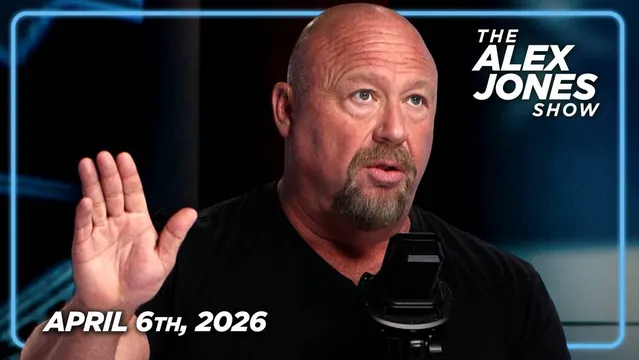
The rescue operation for the downed airmen reportedly involved 155 aircraft, including four bombers and 64 fighters, to create diversions across seven locations. Donald Trump praised the "genius" of the military for landing planes on wet sand and rebuilding helicopters in less than ten minutes. Critics argue the mission was a "trap" and express concern that the president is revealing sensitive operational response plans during public briefings.

The Artemis 2 mission is criticized for its provocative messaging, with the commander making statements that some interpret as admitting humans have never been to the moon. Daniel Liss suggests that the original Apollo missions utilized "torsion physics" that has never been shared with the public or other nations. There is speculation that NASA discovered ancient ruins on the moon, leading to a decades-long cover-up and the current push for a new manned mission.

General McCaslin was reportedly in charge of "memory metal" recovered from the 1947 Roswell crash, a material capable of withstanding extreme heat for space travel. In a bizarre modern development, a Canadian astronaut on the Artemis mission included a Sasquatch on his official mission patch, declaring "Sasquatch is the truth." This follows a wave of reported Bigfoot sightings in Ohio, leading to speculation about the connection between these entities and the UFO file.

An Army Military Police veteran describes the logistical nightmare of extracting nuclear material from Iranian fortresses, involving specialized biological and chemical units. The mission is characterized as a "suicide mission" due to the likelihood of booby traps and the need for massive air armadas to escort extraction teams. The host reiterates that Iran's ability to harass shipping in the Strait of Hormuz makes the war unwinnable.

General William Neil McCasland, a top official at the Air Force Research Laboratory, has reportedly been missing for over a month following President Trump's order to release secret UFO files. The disappearance is linked to a broader "war" within the deep state over advanced technology and the secret space program. Elon Musk's plans to launch Mars missions from the dark side of the moon are also discussed as part of this technological shift.

A call to action encourages listeners to share InfoWars content to combat what is described as a globalist system in tatters. References are made to Carnegie Endowment and Rockefeller Foundation documents from 2013 that allegedly identified the broadcast as a primary threat to the global establishment. The segment emphasizes the permanence of the "InfoWar" regardless of the physical facility's status.

The current global conflict is framed as a spiritual battle between good and evil, requiring individuals to seek a personal relationship with God through prayer and repentance. It is argued that traditional churches have been captured by the Rockefeller Foundation and the ecumenical movement, as evidenced by the presence of rainbow flags in cathedrals. True spiritual connection is described as an "inside job" that provides individuals with a specific mission to fight tyranny.

The conversation focuses on the logistical impossibility of the Fort Huachuca assassination theory, noting that the unit involved is a conventional military task force dedicated to border security. Gary Melton argues that the idea of a secret planning session to kill a U.S. citizen occurring in such a facility is absurd. He addresses the credibility of Mitch Snow, who claimed to be a Green Beret witness to the meeting, labeling the story as "utter rubbish."

The segment examines the tactics of Canary Mission, an organization that documents the political activities of students and faculty. The host claims the group's goal is to ensure that "today's radicals are not tomorrow's employees" by blacklisting anyone who opposes the Zionist agenda or Israeli government policy.

Jones describes his relationship with the Holy Spirit, characterizing his work as a "Mission Impossible" style order from God that he must execute despite the personal weight of the responsibility. He references Steve Bannon's "red alert" status regarding the current political climate, emphasizing that the war for the future of humanity has moved into a "maximum go time" phase.

A personal account is given of a spiritual vision received 27 years ago, which reportedly outlined a mission to face evil and witness a "download" from the Holy Ghost. The narrative emphasizes that the current success and survival of the broadcast are due to divine intervention rather than personal merit. The segment concludes with a call for listeners to seek "safe harbor" under God's protection.

Daniel List theorizes that John F. Kennedy was assassinated partly because he wanted to share UFO technology with the Soviet Union for a joint moon mission. This "peace in space" initiative was allegedly anathema to the deep state actors who wanted to weaponize the technology. Donald Trump’s connection to this history through his uncle, who examined Nikola Tesla’s papers, suggests he is continuing a long-standing battle for control over these secrets.

The Israeli military operation against Iran is reportedly named "Rising Lion," a reference to the flag of the pre-1979 Iranian monarchy. Critics warn of "mission creep" where a limited strike on nuclear sites inevitably leads to a regime change war. The assassination of negotiators, such as Hamas leader Ismail Haniyeh's family, is cited as evidence that the current leadership does not want a peaceful resolution.

Elon Musk's behavior is analyzed through the lens of high-functioning Asperger's and a total obsession with his scientific missions, particularly the colonization of Mars. His distress is linked to perceived threats to his "technological children"—his companies and projects. Musk is characterized as a "good Frankenstein" whose primary mission is the preservation of humanity through interplanetary expansion.

The host reflects on the immense personal stress of managing the broadcast and the urgency of the current political moment. Comparisons are made between the focus of Elon Musk and Donald Trump in the face of global challenges. The discussion emphasizes a spiritual battle between freedom and what is described as "Satanism" and "World War III."

The current political climate is described as a total global shakeup and a second American Revolution aimed at restoring the American Republic. Warnings are issued regarding potential "false flag" events, such as a suitcase nuke, that globalists might use to incite panic or blame foreign adversaries like Russia or Iran. The primary mission of destroying the globalist power structure is declared complete, though the risk of a nuclear conflict remains a primary concern for the survival of the West.

The human race is described as being at a crossroads between a "Type One Civilization" and nuclear destruction. Elon Musk's vision for Mars exploration is presented as the next step in human evolution, comparable to the Wright brothers' first flight or Leif Erikson's discovery of North America. This expansionist view is contrasted with "Agenda 2030," which is characterized as an anti-human system of global control.

An analysis of Elon Musk's "high-functioning Asperger's" describes his obsession with solving complex problems and his drive for innovation. Musk's strategy of avoiding patents and using open-source principles is credited with putting him a decade ahead of competitors like Jeff Bezos. His long-term vision includes a satellite grid for Mars missions and dominating every technological facet of the future.