Topic: Locals

109 chapters across the catalog

The hosts emphasize the importance of voting in the midterms, particularly for local positions like sheriffs, school boards, and state legislatures. They disagree with figures like Nick Fuentes who suggest "punishing" the Republican Party by sitting out the election. Mark Dice argues that even a flawed Republican majority is preferable to a Democratic takeover that would pack the Supreme Court and end the filibuster.
The speaker discusses an investigation into fraudulent daycare centers that were staged for media appearances, highlighting how local news and CBS were manipulated to create a false narrative of legitimacy, despite the centers being closed or nonexistent.

Existing laws like the Sherman Antitrust Act and the Clayton Act could be used to break up the meatpacking monopolies if the government chose to enforce them. A video breakdown by a commentator named Pam explains how the Packers and Stockyards Act of 1921 was designed to protect family farms. The "real revolution" is described as citizens buying meat directly from local ranchers to bypass corporate control.

Leonardo Joni promotes "Save Indiana Heritage," the first anti-immigration organization in Indiana, which focuses on the impact of mass migration on rural areas and national parks. She encourages citizens to organize locally to protect their communities from being "overrun" by cultures that refuse to assimilate. Joni warns that if non-violent political solutions are not utilized soon, the situation may escalate into more direct confrontations as resources become scarce.

Mel K urges listeners to look beyond Donald Trump and focus on securing the 2026 midterm elections at the local level. She highlights the work of Harmeet Dhillon in cleaning up voter rolls and encourages citizens to run for school boards and city councils. The "Cloward-Piven" strategy is cited as the method being used to collapse the country through open borders and financial disorder.

Dale Comstock advocates for holding the media and local politicians accountable "with extreme prejudice" for their roles in inciting civil unrest. He argues that the right must stop relying on a corrupted court system and instead adopt the mindset of Patrick Henry during the American Revolution. Comstock characterizes the Democratic Party as a "party of murderers" due to their stances on abortion and gender-affirming care for children.

A caller discusses his efforts to move off the grid using water wheels and solar power to "defund" the system. The host responds by noting the difficulty of state secession because states like Texas are deeply dependent on billions of dollars in federal funding for infrastructure and education. He laments the "boring" nature of local politics but acknowledges it as the level where radical policies often begin.

The host recounts horrific reports of "snuff films" involving toddlers, linked to past DynCorp and UN scandals. Serafin notes that while these cases are a small part of the FBI's work, local police officers see similar "ugly evil" every day. They discuss the psychological toll on those who must document and investigate these crimes to bring perpetrators to justice.

A caller suggests that the Trump movement should mobilize local and state leaders to create a "deeper bench" of support. The proposal includes establishing neighborhood watches, civil defense groups, and barter systems to survive potential economic turmoil. Jones agrees that a decentralized "Americana" movement must fill the vacuum left by the removal of DEI policies.

In his final remarks, General Flynn emphasizes that the American people must remain disciplined and demand accountability for those who committed treasonous acts against the nation. He advocates for "local action equals national impact" and supports the Department of Government Efficiency (DOGE) in reducing the size of the executive branch. Flynn warns that the Chinese government continues to play a major role in subverting US interests.

Callers Jim and Joe discuss the likelihood of a Thanksgiving ceasefire announcement and the importance of local community building. Joe argues that Americans should focus on county and municipal governance rather than solely looking to federal leaders. Jones agrees, noting that globalist organizations like the UN often use "think global, act local" strategies to implement their agendas.

Sarah Gonzalez and Alex Jones identify decentralization as the primary counter to globalist control. They advocate for local sovereignty, self-sufficiency, and a return to community-based decision-making. The COVID-19 lockdowns are described as a turning point that awakened many Americans to the dangers of centralized government authority.

Jennings recounts conversations with locals in Kauai, Hawaii, who reportedly expressed intense dislike for Mark Zuckerberg and his private estate. He warns Zuckerberg that his bunker will become a "tomb" if civilization collapses because the local population is aware of his presence. The host suggests that tech billionaires should "roll over" and stop supporting globalist agendas for their own safety.

Michael Holderness, a business owner and Trump delegate in Siesta Key, discusses the local government's failure to provide guidance or debris removal following the hurricane. He suggests that recent beach dredging and "nourishment" projects may have exacerbated the wave impact and flooding. Holderness highlights the community's efforts to unite and help neighbors in the absence of federal or county leadership.

General Flynn emphasizes that the current conflict is an intellectual, physical, and spiritual war against a soulless Marxist group. He encourages citizens to engage in local action to have a national impact before the November election. Flynn praises Donald Trump's resilience after surviving attempts on his life and calls for a return to constitutional values.

The rise of more dangerous Mexican cartels and the influx of Chinese-made fentanyl are described as an invasion of the United States. General Flynn invokes the spirit of Thomas Paine and George Washington to encourage Americans to get organized at the local level. He warns that the country cannot afford to be "frozen" during this period of existential threat.

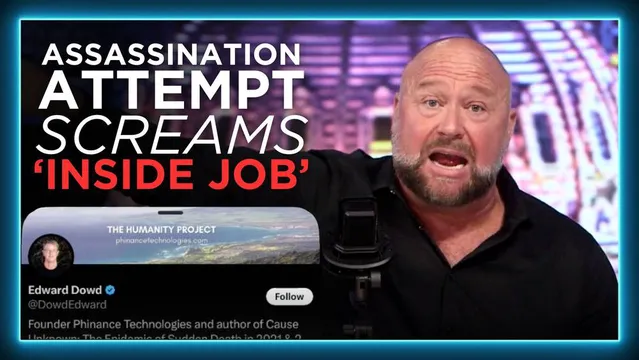
Critical Intel:  Time And Placement Of Florida Trump Assassination Attempt Screams Inside Job
56:05 - 58:37

Critical Intel: Time And Placement Of Florida Trump Assassination Attempt Screams Inside Job

Security Details and the Engagement of the Suspect in Florida

During the incident in West Palm Beach, the suspect reportedly possessed a scoped rifle, backpacks, and a GoPro camera, presumably to record the assassination. Secret Service agents assigned to the immediate detail opened fire on the suspect as soon as he was spotted in the brush. While the local agents are praised as heroes, the broader leadership is criticized for allowing a gunman to get within 300 to 500 yards of the former president.